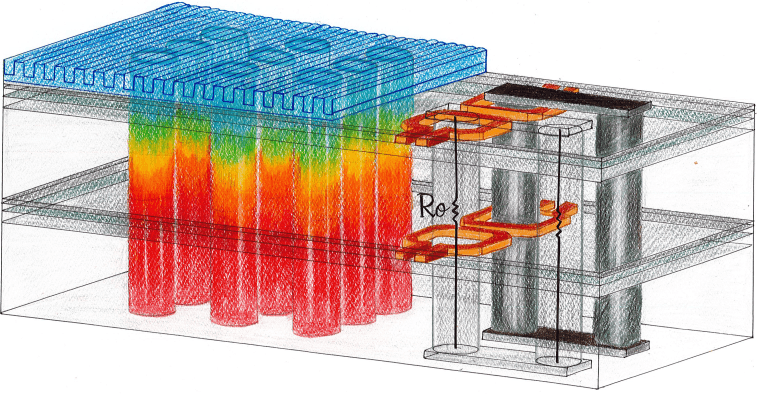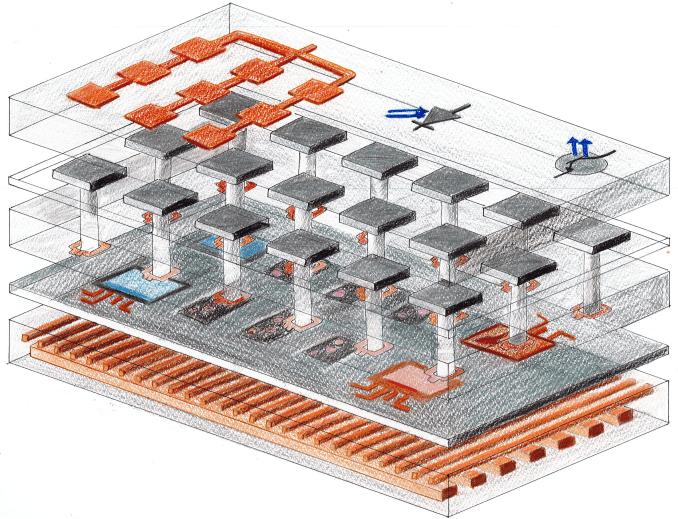
3D IC Challenges
- PDNs use DC in TSVs and interconnects, leading to inductive (L·di/dt) and resistive losses
- Middle dies retain heat due to lack of direct heat paths to ambient
- Electromigration in DC tracks and vias
- Signal integrity issues due to non-isolated chiplet power supplies
FTSV Solution Overview
Ferromagnetic Through Silicon Vias (FTSVs) facilitate AC power transmission, mitigating the above challenges by enabling:
- AC voltage distribution with per-die PMICs
- Thermally conductive vias acting as heat pipes
- No electromigration due to AC operation
- Multi-band communication through a single FTSV
The foundational patent describing this technology can be accessed here: US20250385187A1 - Ferromagnetic Through Silicon Vias in Three-Dimensional Integrated Circuits.
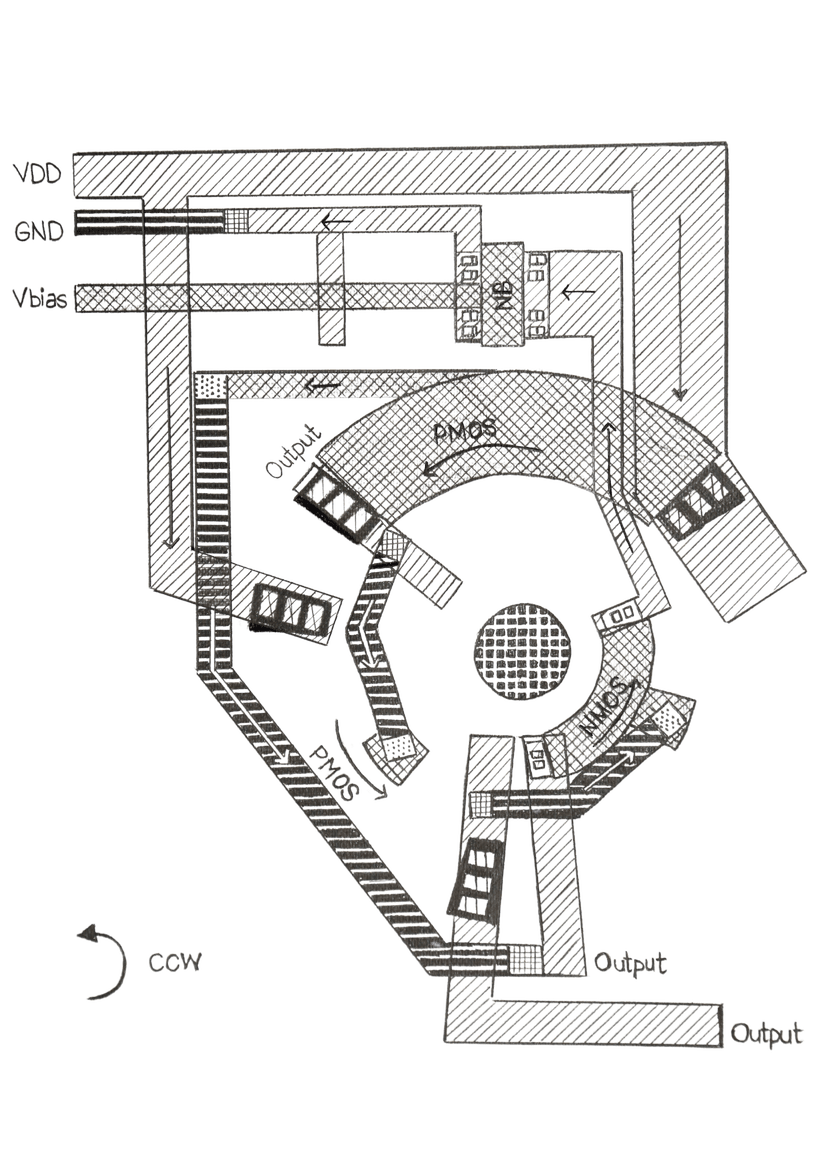
Problem 1 – PDN Supply Using DC Voltage
- High L·di/dt due to long tracks and multiple TSVs
- Electromigration leading to reduced reliability, shorter lifespan, and hot-spot failures
Problem 2 – 3D Stacking Challenges
- Thermal management limitations
- Separate power and communication networks
- Non-isolated chiplet networks causing noise, coupling, power-ground bounce, and EMI issues
FTSV Implementations
FTSVs use GHz ferrite materials and carry magnetic flux instead of current, enabling:
- AC power distribution
- Natural heat pipe behavior
- No electromigration
- Isolated chiplets
- GHz-band communication